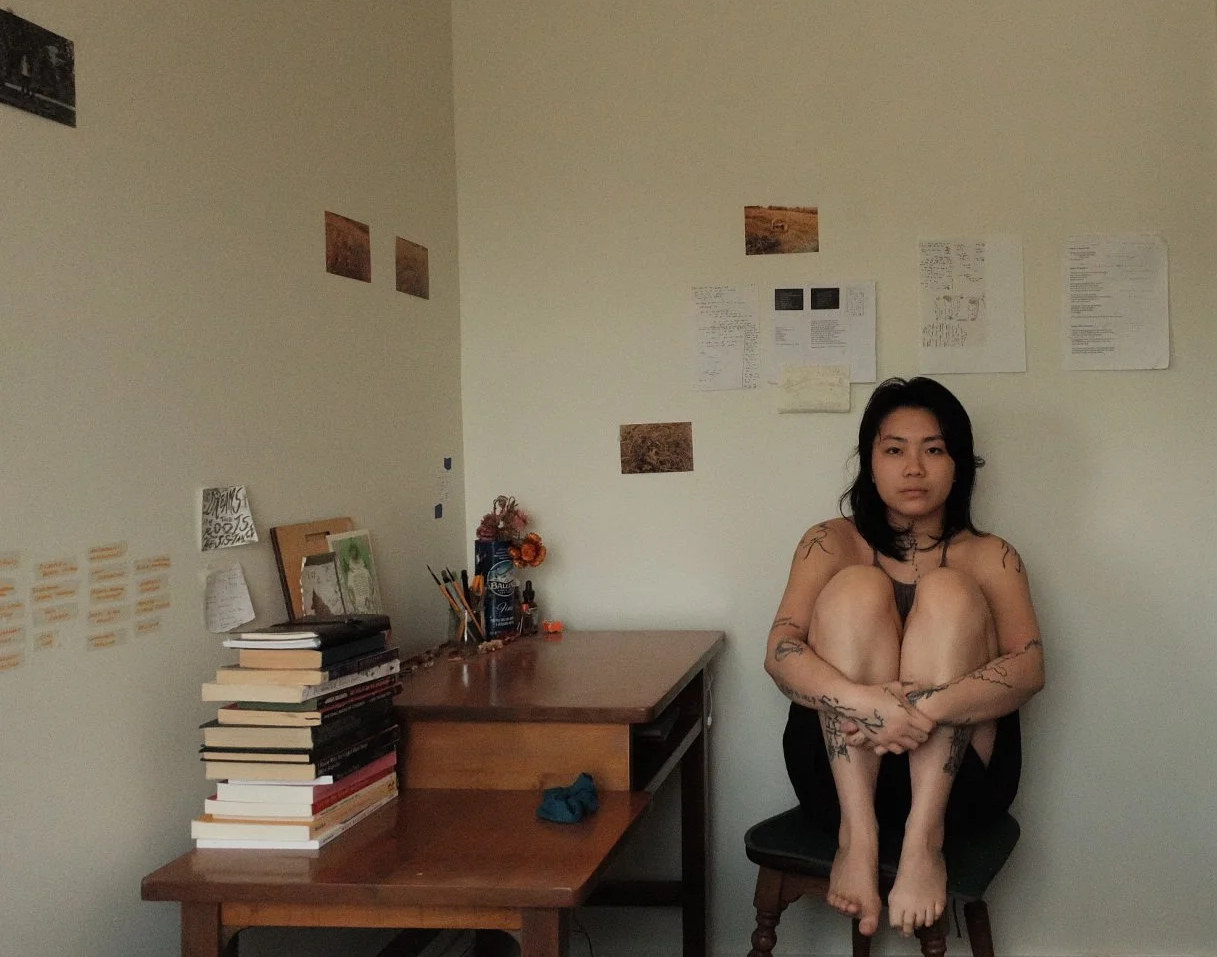
E. Juniper W. Naka ( all pronouns ) is a gender queer ( fluid, expansive, non-conforming ) Japanese-European-Cantonese-American diasporic multi and inter-disciplinary writer, poet, artist, musician, dancer, chef;

intersectional scholar, environmental-food justice-indigenous sovereignty-activist, community organiser; author, editor, filmmaker, creative director;

teacher and student of food, earth, lands relations.

A fervently tender nurturer, giver, whole sentient being;

protector, healer, lover of and for all- in especially women, children, our most vulnerable neighbors in the front lines of ecological collapses;

stolen, erased, biologically destroyed seeds, soils under continuous occupational forces;

incarcerated, caged and stifled sentients, kins , siblings across oceans, rivers, valleys first and nevertheless.

|

Born in Flushing New York, predominantly raised in a fisherman village- Tai O amongst islanders and indigenous elders on Lantau Island Hong Kong in its rooted cultural diasporas;

her lifeworks intrinsically breathes and integrates sacred offerings, wisdom of their ancestors, elders and continued research studies, academic training in the school of food studies and liberal arts.

|

Their field of study explores the ever-evolving relationships between human experiences, relations to the depths of time, excavations of lost, hidden, fabricated diasporic foodways;

focusing on diversifying languages, representing and de-colonial forms of collective imagined realities in music, the arts;

expanding transnational solidarity resistance works, philanthropic and campaigning efforts regeneratively within institutionalized education spaces, agriculture, food systems, farm projects;

expanding woven umbrella works of local independent press—uplifting and redistributing resources to youth-led projects, independent artists, writers, poets, creators, witches, magicians;

research and consistent adaptations of ecologically-interdependent world and system building ( grounded in living realities ), egalitarian societies;

early childhood education through an anthropological, archaeological, ecological lens- ecosystems that centers values of longevity, preservation, abundance, life rather than extractivism, exploitation, maximizing efficiency and profit-making through often unethical and systemically violent, oppressive means.

|

Their practice roots in the deepening of relations within nuanced resistance and archival works in its truthful multiplicities. (noting the limitations of their predisposed epistemological perceptions)

Exploring liminal spaces between tasting, feeding, sensual embodiment; cultural memory, resistance, resilience.

|

In their opinion, our most powerful tools in radically dreaming- building sustainable, equitable futures that truly, belongs to us all- students of the earth.